
FACULTAD DE MEDICINA VETERINARIA Y ZOOTECNIA - PLATAFORMA DIGITAL
doraramey
In semiconductor manufacturing, a chemical shipment system must do greater than transport chemicals from storage space to the point of usage. It needs to keep ultra-high pureness, offer regular circulation and pressure, protect workers and tools, and remain readily available with marginal interruption. As semiconductor procedures come to be increasingly conscious contamination and process variant, high uptime ends up being a basic layout goal for UHP chemical delivery systems.
A high-uptime system combines devices redundancy, continual tracking, automation, reliable isolation, precautionary maintenance, and carefully picked elements. These components collaborate to reduce unplanned downtime while maintaining trustworthy chemical distribution throughout demanding production procedures.
Redundancy for Constant Chemical Availability
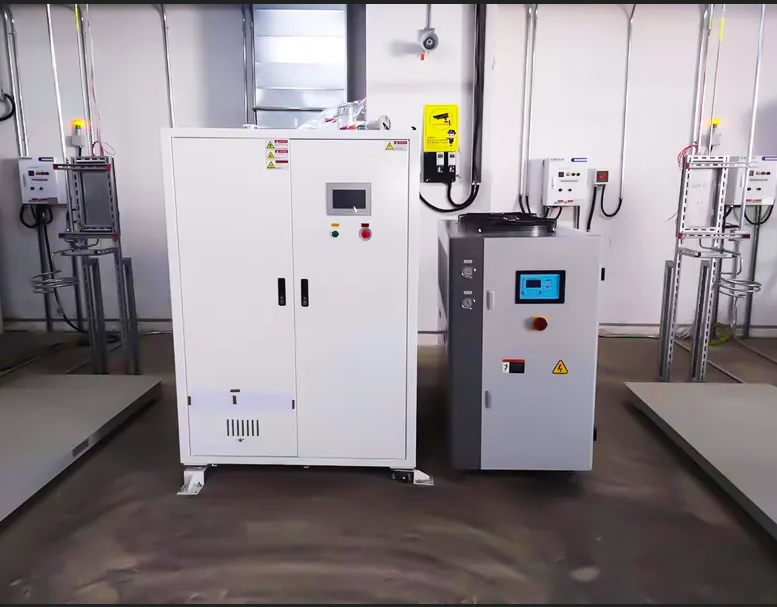
Redundancy is just one of one of the most important concepts in making a high-availability UHP chemical delivery system. Essential components such as pumps, shutoffs, sensors, power materials, and control components can be set up with back-up capability to ensure that a solitary part failure does not necessarily quit manufacturing.
For instance, redundant pumping setups can allow a standby pump to take control of when the key pump needs upkeep. Similarly, repetitive instrumentation can provide an added dimension source if a sensing unit fails. The suitable degree of redundancy depends upon chemical features, procedure needs, manufacturing capacity, and the consequences of equipment failing.
Redundancy must also extend to critical energies and control infrastructure where useful. Backup power, trustworthy interaction networks, and fault-tolerant control design can aid prevent fairly tiny devices issues from coming to be production-wide interruptions.
Tracking and Automation for Very Early Trouble Discovery
Continual tracking allows drivers to identify abnormal conditions prior to they develop into significant failures. A modern UHP chemical distribution system can check parameters such as stress, circulation price, fluid degree, temperature level, shutoff condition, and leak problems.
Automated alarms can notify operators when dimensions relocate outside predefined operating restrictions. Advanced systems can use programmable reasoning controllers and supervisory control systems to examine multiple parameters simultaneously and start predefined reactions.
Automation can additionally enhance repeatability. Instead of depending heavily on hands-on shutoff operation or chemical transfer treatments, automated series can regulate filling, transfer, flushing, seclusion, and other operations according to established procedure reasoning. This decreases driver irregularity while boosting procedure uniformity and traceability. To know more at https://www.chengweisemi.com/product/ .
Isolation Layout for Safer Maintenance
Reliable UHP Chemical Dedelivery Cabinet isolation is crucial for maintaining uptime since maintenance tasks need to not unnecessarily interrupt the entire chemical circulation network. Valve manifolds, isolation shutoffs, and committed process sections can permit specialists to isolate specific parts or branches while various other parts of the system continue running.
A properly designed isolation strategy should take into consideration both safety and security and operational continuity. Maintenance personnel need clear methods of separating tools from chemical resources prior to examination or substitute. At the exact same time, the system must be set up to make sure that planned upkeep can be carried out without triggering preventable disruptions to unassociated production tools.
Proper isolation likewise sustains troubleshooting. When stress, flow, or leakage problems take place, specific sections can be separated to aid determine the afflicted component or piping section much more successfully.

Preventative Maintenance and Condition-Based Methods
High uptime can not depend solely on replying to failures after they happen. Precautionary maintenance assists identify wear, deterioration, and performance adjustments prior to they cause unanticipated downtime.
Maintenance routines can consist of examination and replacement of seals, shutoffs, filters, pumps, sensors, and various other critical elements according to supplier recommendations and operating conditions. Condition-based upkeep can offer added benefits by utilizing system information to identify establishing problems.
Gradual modifications in pump efficiency, pressure security, circulation features, or valve reaction might show that a part requires attention. Integrating functional information with maintenance records can assist engineering groups figure out appropriate solution intervals and prioritize vital devices.
Trusted Element Option and Product Compatibility
Element option directly impacts both pureness and system dependability. Products that contact the chemical has to work with the particular chemical being delivered and with the called for purity level. In several UHP applications, electropolished 316L stainless-steel piping and properly specified wetted parts are utilized to support requiring contamination-control demands.
Shutoffs, installations, regulatory authorities, pumps, filters, tubes, sensors, and seals must be selected according to chemical compatibility, pressure and temperature level demands, leak performance, sanitation, and expected service life. Components should likewise have suitable surface finishes and manufacturing controls for the intended UHP application.
Standardizing parts where sensible can streamline spare-parts monitoring and professional training. Standardization must never ever override chemical compatibility or process-specific needs.
Conclusion

Designing a high-uptime UHP chemical delivery system calls for a systems-level method. Redundancy lowers the impact of individual failures, monitoring offers early exposure right into unusual problems, automation improves consistency, isolation allows safer maintenance, and preventive techniques help in reducing unanticipated interruptions. At the very same time, trustworthy and chemically suitable elements supply the structure for lasting system performance.
By incorporating these principles from the initial engineering stage, semiconductor centers can develop UHP chemical shipment framework that sustains purity, safety and security, operational connection, and trustworthy point-of-use chemical supply.